Music in the ice
A Renaissance Journey to Nova Zembla / Flemish music of the 16th century
Concept and Performance Script
For a Consort of Renaissance transverse Flutes with percussion and Estonian kannel
PART I
Concept and Inspiration of the Program
In the winter of 1596, the Dutch navigator Willem Barentsz and his crew were forced to remain in the Arctic after their ship became trapped in heavy polar ice. In search of a Northeast Passage to the Indies, Barents and his crew of 17 met with disaster when they were marooned in northern Siberia on the island of Nova Zembla for more than nine months. In a hastily constructed wooden shelter named Het Behouden Huys completely isolated from the familiar world, they spent these longmonths in total darkness and deadly uncertainty. Amazingly, 12 of the men, though not Barents, outlived the ordeal. When they returned to the Netherlands in late 1597, sailor Gerrit de Veer published an illustrated account of their experience. The book, a memoir of survival in the style of a ship’s logbook, with stories of polar bears, frostbite, Arctic foxes, and the aurora borealis became “one of the first adventure bestsellers,” says University of Rochester art historian Christopher Heuer.
It sent European minds whirring with thoughts of the Arctic. Shakespeare himself may have been referring to the book when he wrote in Twelfth Night of “an icicle on a Dutchman’s beard.” And it was Shakespeare’s London publisher who printed the first English translation of de Veer.
In 1871, a group of Norwegian hunters discovered an odd clump in the frozen terrain of Nova Zembla, the permafrost revealed not only material traces of a harsh struggle for survival, but also evidence of a rich cultural life. Among the frozen belongings was a wooden transverse flute and other objects.
Today they reside in the Rijksmuseum, in Amsterdam, along with other artifacts of the journey, including compasses, medallions, the flute, and a Dutch clock that, de Veer noted, stopped keeping time on November 1, 1596, when the Arctic cold overcame it.
According to Heuer: “The North was unsettling not because of dazzling difference, but because of monotonous sameness. Rather than an Eden, to Renaissance travellers the Arctic was something like the moon.”
Thus being said Barents’s crewmen improvised to survive the lunar landscape they found on the island of Nova Zembla, which in later times was the site of a Soviet gulag and a location for thermonuclear testing. With driftwood and pieces of their ship’s hull, they built what de Veer called a “safe house.”
De Veer “narrates what was essentially the story of an elaborate staying put,” according to Heuer; “living off meat from trapped Arctic foxes and hunted polar bears, drinking melted snow and rationed wine and beer salvaged from the ship, the crew passed the time tending to the house itself.
In essence, they were trying to territorialize an ice desert in conceptual as well as physical terms to fashion shiplike life atop an unbordered wasteland.”
During the Renaissance, science and art had not yet become intellectually separated as they are today. Many early travel accounts contain poetry. The Hungarian poet Stephen Parmenius sailed to Newfoundland as the official chronicler of an expedition and ultimately drowned there. He had intended to write a Latin epic poem about the New World. Yet in a letter written in 1583, he asked: “What shall I say … when I see nothing but solitude?”
When de Veer and his companions finally set out in open boats into the waters around Nova Zembla freed from the ice by the thaw, and were rescued several weeks later by a Dutch merchant vessel, they left the Arctic behind and returned to the Netherlands. Today the ice no longer waits for its visitors. It is melting, raising sea levels, and extending its influence far beyond the polar regions. “The Arctic,” writes Heuer, “is coming for you.”
This concert program is a reflection on presence, memory, and the pathways of art. The late Renaissance was an age of constant movement, exchange, and the active dissemination of printed music. Collections of songs and dances were spread throughout Europe in the form of manuscripts and printed works. Music traveled across regional boundaries, carried by books, memory, and musicians themselves.
The transverse flute, a prime example of this cultural context, was widely played throughout the vast Habsburg Empire and beyond; it shone in all its glory at the Burgundian court, while at the same time being regarded as an exquisite curiosity in Tudor circles. Visual sources of the period, such as the drawings of the artist Urs Graf, frequently depict flutists among mercenary landsknechts. This suggests that the instrument was closely connected to movement, everyday life, and human physical presence. In consort, traverso flutes create a unique sonic space, at once collective and deeply intimate, persistently imitating the human voice.
Supported and enriched by the Estonian kannel, a type of psalterium whose remarkable versatility shines both in solo passages and within intricate polyphonic textures, the ensemble creates a distinctive palette of colours. This unique combination reflects the musical world of the late Renaissance, an era shaped by curiosity, exploration, and a constant drive for discovery.
The program brings together repertoire born within this complex European network. The Netherlands serves as a central axis of the concert, reflecting the cultural environment of Barentsz’s expedition itself. The dance collections of Pierre Phalèse and chansons of Cornelis Verdonck represent repertoire created for circulation and adaptation. The music of Jan Pieterszoon Sweelinck reveals a refined urban culture, while theworks of Cipriano de Rore, Maddalena Casulana and Alfonso Ferrabosco introduce the listener to more intimate chamber sound worlds.
Italian repertoire adds another dimension to the program, placing poetic text and emotional expression in the foreground. The madrigals of Maddalena Casulana, one of the first women composers to publish music under her own name, raise questions of authorship, visibility, and the transmission of traditions within Renaissance culture.
Program
PART II
Block 1. Prologue: The Pride of Reason and Human Fragility
Appenzeller Tanz: Ich staig uff einem Fygenbaum
Schweizer Tänze aus der Lautentabulatur von Samedan Fundaziun Planta, FP/M 1, 1563
Ludwig Senfl (1486-1543) Was ist die Welt
Johann Walter (1496-1570) Vere beatus et Deo factus
manuscript Motets, Chansons, Madrigals, Songs, D-Rp ms.BZR A.R.940-941
Heinrich Isaac (1450–1517) La Mora
Liederbuch des Johannes Heer von Glarus
Block 2. The Ocean and the Ice Trap
Maddalena Casulana (c. 1544 – c. 1590) Morir non può 'l mio core
Il Desiderio libro primo, no. 4, 1566
Cornelis Verdonck (1563 – 1625) O com’è gran martire
Bicinia, sive cantiones suavissime duarum vocum, 1590
Cipriano de Rore (1515 or 1516 – 1565) Mia Benigna Fortuna
Il secondo libro de madrigali a 4 (1557)
Alfonso Ferrabosco Sr., (1543 — 1588) Psalm 42:3 Fuerunt
mihi lacrimae meae panes die ac nocte dum dicitur mihi
quodite "Ubi est Deus tuus?”
London, British Library MS RM 24 d. 2 (John Baldwyne’s
Commonplace Book)
Block 3. Polar Night in the House of Refuge
Noë Faignient (1537- 1578) O vanité
La fleur des chansons a 3 parties by Phalèse 1574
Gerardus Turnhout (1520 – 1580) Compt al uyt zuyden uyt oosten
Ian Belle (1545 – 1566) O doloreux herte
Een Duijtsch Musijck Boeck by Pierre Phalèse, 1572 Antwerp
Block 4. Memory of Home and Earthly Warmth
Jan Pieterszoon Sweelinck (1562-1621) Tes beaux yeux causent mon amour
e Rossignol musical des chansons de diverses et excellens autheurs de nostre temps a quatre, cinq et
six parties Antwerp, Pierre Phalèse, 1598.
Geert van Turnhout Jouissance vous donneray
La fleur des chansons a 3 parties
Ludovicus Episcopius (c. 1520 – 1595) Ick seg adieu
Een Duijtsch Musijck Boeck
Block 5. A Flash of Life: Celebration in the Ice
Was well mir uff abent than
Schweizer Tänze aus der Lautentabulatur von Samedan
Pavane et Gaillarde La garde
Pavane and Gaillarde Ferrareze
Premier Livre de Danseries by Pierre Phalèse 1571, Leuven
Block 6. Finale: The Return of Music Across the Centuries
Cornelis Verdonck Ave gratia plena
The Mattertia Line engraving after Maarten de Vos. Antwerp: Jan Sadeler, 1584.
Noë Faignient Amour me donne
La fleur des chansons a 3 partiesLuca Marenzio (1553 or 1554 — 1599) Zefiro torna
Madrigals for 4 Voices 1584
Allemande et Saltarello Poussinghe
Recueil de danseries, contenant presque toutes sortes de danses (Phalèse Jr., Pierre) 1583
Dramaturgical Script of the Concert for accompanying program notes
PART III
Block 1. Prologue: The Pride of Reason and Human Fragility
Introduction:
“The end of the sixteenth century. An age of great geographical discoveries, printing, and the flourishing of humanism. Renaissance man feels himself equal to God: he draws maps, builds ships, and prepares to conquer the oceans. In May 1596, Willem Barentsz’s expedition leaves Holland in search of a northern route to China. Yet the philosophers of the age had already warned mankind of the limits of its pride before eternity.”
Text: Erasmus of Rotterdam, The Complaint of Peace (1517)
"Look at the structure of the human body. Nature gave other living creatures weapons… and only man she left naked, weak, and delicate. She gave him the sound of a voice and reason in order to cultivate friendship. And yet man challenges the elements. He entrusts his life to a fragile piece of wood driven by the winds and ventures into raging oceans, seeking danger where nature intended silence. What madness drives us when we leave the peace of our homes for the abyss, where every moment threatens to swallow our pride?”
Block 2. The Ocean and the Ice Trap
Introduction:
“August 1596. Barentsz’s ship enters unknown northern latitudes and reaches the shores of a vast, desolate archipelago long known to Russian Pomors as Novaya Zemlya. The advancing Arctic ice mercilessly closes around the vessel. The sailors realize that they are cut off from civilization. From the journal of the expedition’s navigator and chronicler, Gerrit de Veer.”
Text: Gerrit de Veer, The True Description of Three Voyages by the Dutch to the North, entries of 26 and 30 August 1596
“On the 26th of August the ice pressed upon us with such force that our ship became entirely enclosed by floes piled one upon another… We thought our ship would soon be smashed to pieces. On the 30th of August the ice rose beneath the ship with such terrible cracking and roaring that it seemed the vessel would split in two… Our boats were crushed. We understood that we would have to spend the winter here and began to place our trust in God.”
Block 3. Polar Night in the House of Refuge
Introduction:
“From the wreckage of their dying ship and driftwood cast ashore by the sea, the sailors build the Behouden Huys, the ‘House of Refuge.’ In November the sun sinks below the horizon, leaving the men in the complete darkness of the polar night. The freezing wooden hut becomes the only inhabited place for thousands of miles.”
Text: Gerrit de Veer, entries of 4 November and 6 December 1596 "On the 4th of November we could no longer see the sun… Then began the long, gloomy, unbroken night… On the 6th of December the frost became so severe that we knew not how to protect ourselves from it… Our leather shoes froze so hard that they became like horn and could not be worn. The walls and roof of the house inside were covered with ice two fingers thick, and even upon our beds lay white frost… We lay in darkness, listening to the storm howling outside, and prayed that this night would one day end.”
Block 4. Memory of Home and Earthly Warmth
Introduction:
“In conditions where nature freezes and dies, the human spirit seeks support in whatever still connects it to the world of the living. Music and poetry become a saving bridge leading thousands of miles back, toward the warmth of European cities and memories of loved ones. The Dutch sailors, lost among the ice, turn to verses of love as the only flame capable of overcoming the Arctic cold.”
Text: Janus Secundus (1510 – 1536) Elegies, Book I, Elegy 1.5
21
Please, forbid me to die, permit me to live, please, eyes: I’m not the type whose death brings a triumph.
Let your coral-red lips meet my lips, billing dove-like, make sure that your tongue and your teeth do what they should, and give me a hundred, give me a thousand succulent kisses; give something else, my darling, and I’ll be a god…
…and next I will follow you racing through places of joy.
Meanwhile, as I run, if the Sun, spying me from his golden lookout, in envy makes me burn even more, you, the only zephyr congenial to my fire, from those rosy lips of yours you must pourmoistened breaths to be drawn in by the furnace of this panting mouth of mine and go right down to the depths of my shrivelled chest and douse the blaze that couldn’t be cooled by drinking the world’s roving rivers or all the waves of the sea.
Block 5. A Flash of Life: Celebration in the Ice
Introduction:
“The man of exciting and anxious era of Geographic discoveries refuses to surrender to death. On January 6, 1597, during the most difficult period of the wintering, the crew decides to celebrate the traditional European feast of Epiphany. For a few hours the icy hut fills with the sounds of dancing. It was precisely in such moments that the flute, faithful companion of movement and daily life, would have been heard on the decks and in the camps of the Renaissance.”
Text: Gerrit de Veer, entry of 6 January 1597 and From “Round about The North Pole” BY W. J. Gordon
The snow fell until it was so deep round the house that on Christmas Day they heard foxes running over the roof; and the last day of the year was so cold that “the fire almost cast no heat, for as we put our feet to the fire we burnt our hose before we could feel the heat, so that we had work enough to do to patch our hose.” On the 4th of January, "to know where the wind blew we thrust a half pike out of the chimney with a little cloth or feather upon it; but we had to look at it immediately the wind caught it, for as soon as we thrust it out it was frozen as hard as a piece of wood and could not go about or stir with the wind, so that we said to one another how fearfully cold it must be out of doors.”
Next day, being Twelfth Eve, on which foreigners, according to the old practice, hold the festivities now customary in England on the following day, the men asked Van Heemskerck that they might enjoy themselves, "and so that night we made merry and drank to the three kings. And therewith we had two pounds of meal, which we had taken to make paste for the cartridges wherewith, of which we now made pancakes with oil, and to every man a white biscuit, which we sopped in wine. And so supposing that we were in our own country and amongst our friends it comforted us as well as if we had made a great banquet in our own house. And we also distributed tickets, and our gunner was king of Nova Zembla, which is at least eight hundred miles long and lieth between two seas.”
Transition:
“In these dark days of decline, the sailors’ only spiritual support remained the eternal words of Holy Scripture.”
Text: Old Testament, Song of Songs 8:6-7
“Set me as a seal upon your heart, as a seal upon your arm; for love is strong as death, jealousy fierce as the grave. Its flashes are flashes of fire, a most vehement flame. Many waters cannot quench love, neither can floods drown it. If a man offered all the wealth of his house for love, he would be utterly despised.”
Block 6. Finale: The Return of Music Across the CenturiesIntroduction:
“In June 1597, the surviving members of the crew leave Novaya Zemlya in open boats. Willem Barentsz himself will die at sea a few days later. The fragile wooden flute of the dead cabin boy remains on a shelf in the abandoned house. Snow buries the hut, and its roof collapses under the weight of ice. Two hundred and seventy-four years pass. In 1871, the Norwegian skipper Elling Carlsen forces his way through the ice to Ice Haven and crosses the threshold of the House of Salvation, returning the voices of a vanished age to the world.”
Text: From “Round about The North Pole” BY W. J. Gordon On the 9th of September, 1871, Captain Elling Carlsen, sailing in the Barents Sea, which he had entered round Icy Cape, landed in Ice Haven and found the house just as De Veer had described it. There it had stood in cold storage for 274 years, never having been entered by human foot since Van Heemskerck had shut the door. The bunks, the table, the bath, the clock, in short everything, all in order, as the orderly Dutchmen had left it. Never did a voyage book receive such ample verification; never did the description of an island home stand the test better. Carlsen, to begin with, knew nothing of De Veer or Barents, but he set to work in a conscientious way and recorded the results like a true archæologist. “Thursday, 14th,” he wrote in his log, "Calm with clear sky. Four o’clock in the morning we went ashore further to investigate the wintering place. On digging we found again several objects, such as drumsticks, a hilt of a sword, and spears.
Altogether it seemed that the people had been equipped in a warlike manner, but nothing was found which could indicate the presence of human remains. On the beach we found pieces of wood which had formerly belonged to some part of a ship, for which reason I believe that a vessel has been wrecked there, the crew of which built the house with the materials of the wreck and afterwards betook themselves to boats."
Estonian Kannel
Anna-Liisa Eller is an Estonian kannel player and teacher. Her main focus in music is on early music and contemporary music creation. She likes to experiment and broaden the possibilities of Estonian chromatic kannel.
This hardly known exotic instrument with surprisingly wide possibilities has been described by different listeners as a sound from heaven. Anna-Liisa graduated from the Estonian Academy of Music and Theatre master degree in 2014 cum laude under Prof. Kristi Mühling.
In the year of 2013 she studied in Conservatoire National Supérieur Musique et Danse de Lyon (Prof. Yves Rechsteiner) and in the year of 2013-2014 in the Staatliche Hochschule fur Musik in Trossingen (Prof. Rolf Lislevand). In 2016–2022 she continued her studies in PhD level in Estonian Academy of Music and Theatre (Prof. Toomas Siitan and Prof. Imbi Tarum).
Anna-Liisa works in close cooperation with several early music ensembles, such as Supersonus (2019 Supersonus debut CD “Resonances” was released under ECM Records), The Bright Future Ensemble, Vox Clamantis, Floridante etc. In 2021 Anna-Liisa’s solo CD “Strings Attached: The Voice of Kannel” was released under Harmonia Mundi. It has received a lot of positive feedback from international music press and was awarded the prize of “Estonian classical music album of the year 2021” and annual prize by Estonian Culture Endowment in 2021.
The Artists
Meet the performers behind the project.
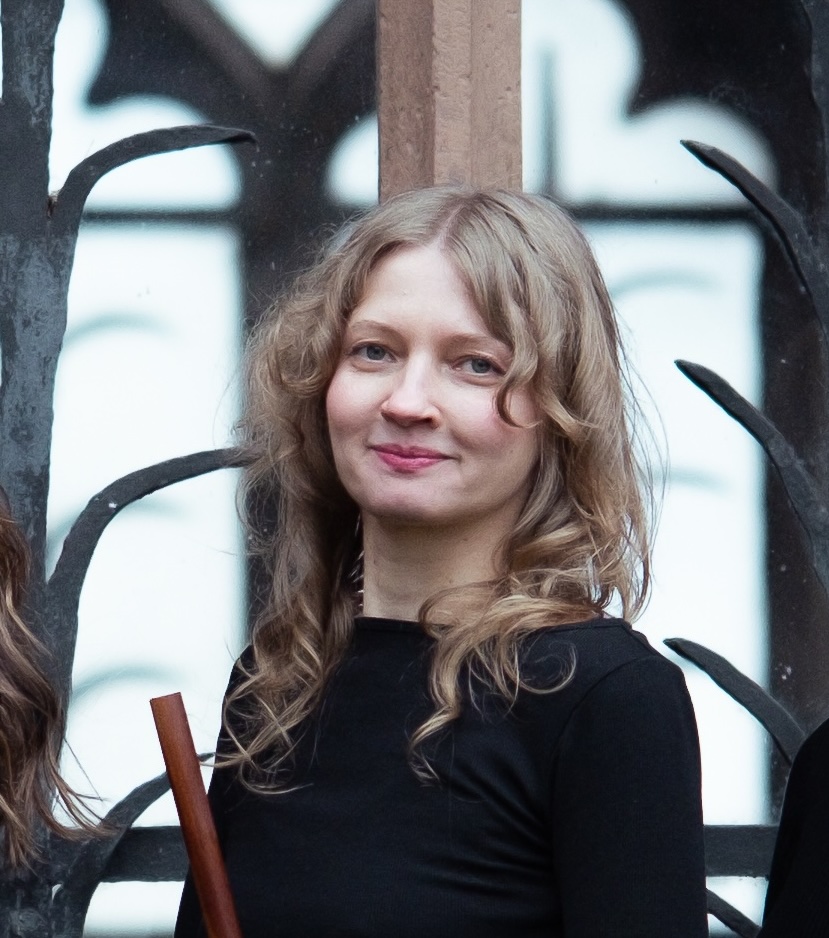
Darina Ablogina
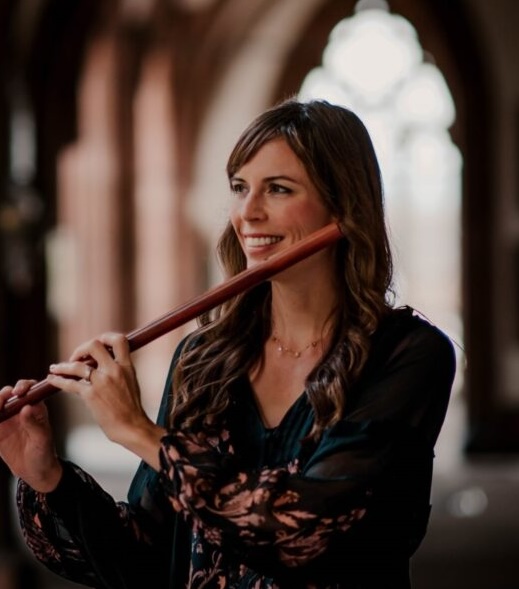
Holly Scarborough
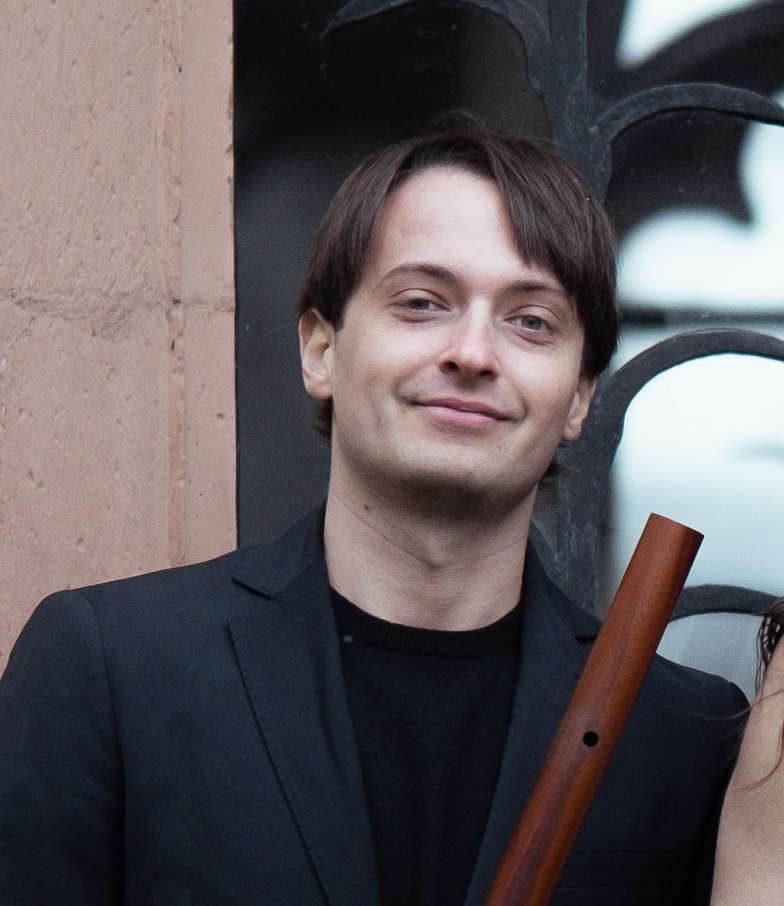
Tommaso Simonetta Sandri